Posted on
Efficient product management for manufacturers, distributors, and processors depends heavily
on selecting the right bulk packaging approach. Whether material arrives in a rail car, tanker, or
flexi container, the ability to break down large volumes into smaller, workable units supports
safer handling, smoother operations, and more adaptable distribution strategies.
At USA Warehousing, bulk packaging is part of a larger ecosystem of logistics knowledge,
facility infrastructure, and industry familiarity. The goal is simple: provide customers with
information, options, and support to help them choose the best path forward for their products
Why Customers Choose Bulk Packaging
Bulk packaging allows large shipments to be divided into container sizes that better align with
production needs, storage limitations, or downstream handling requirements. Many customers
rely on this process regarding:
- Facility limitations: Not all sites can offload entire tankers or rail cars.
- Demand-based distribution: Customers may only need a portion of the full tanker volume at one time.
- Better storage logistics: Totes and drums allow for easier inventory control and staged shipping.
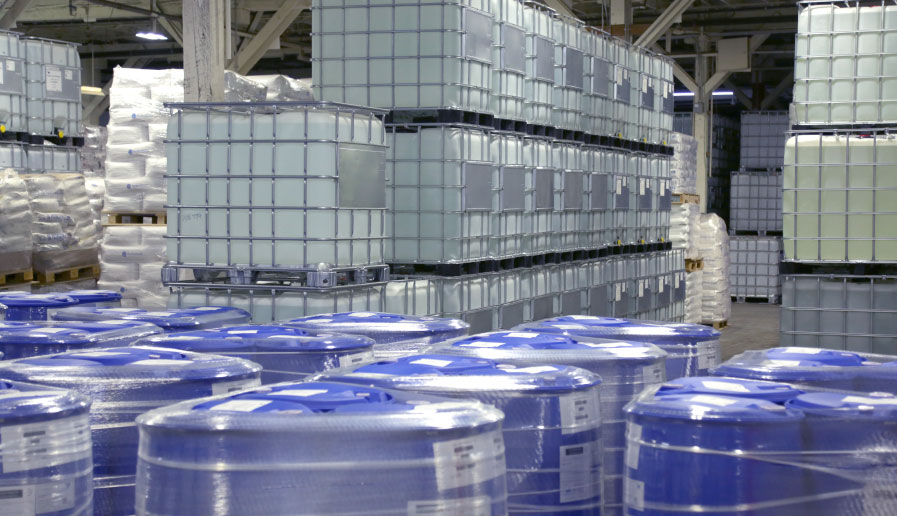
A standard 45,000-pound tanker can be broken down into:
- 274-gallon totes holding roughtly 1,800-2,200 pounds each
- 55-gallon drums holding approximatley 400-480 pounds per drum
This flexibility supports a wide range of industries, especially food-grade and chemical
customers who require reliable, clean, and compliant handling.
Bulk Packaging Options: From Road to Rail to Flexi
Tanks
Bulk liquids arrive in several formats, each with its own advantages:
Rail Cars
- Carry up to 200,000 pounds (equivalent to four road tankers).
- Ideal for large-volume customers seeking maximum cost efficiency.
- Common for materials moving throughtout the continental U.S.
Road Tankers
- Standard for domestic transport.
- Often used for routine replenishment cycles.
ISO Tankers
- A metal frame containing a pressurized tank.
- Used mostly for overseas shipments.
- Less common domestically due to higher cost and limited availability.
Flexi Tankers
- A 20-foot sea container fitted with a flexible liquid bladder.
- Frequently the most cost-effective option for international shipments.
- Require controlled heating in winter months
Regardless of arrival method, customers typically seek a partner who can safely receive,
handle, and repackage their materials into the container sizes that best fit their needs.
Experience, Systems, and Practical Efficiency
Decades of hands-on work have shaped how USA Warehousing approaches bulk packaging.
Familiarity with various materials, container types, and customer requirements contributes to a
process built around efficiency and consistency.
Long-standing supplier relationships also play a role. Reliable access to drums, totes, and
specialty containers helps maintain predictable turnaround times and supports customers during
periods of market fluctuation.
Unload times are another important factor. In the industry, it’s not unusual for tanker offloading
to take several hours. USA Warehousing has refined its internal processes to reduce delays
while maintaining safe handling practices.
Food-grade and chemical customers also depend on compliance. Maintaining certifications
such as FDA registration, kosher/organic programs, and dedicated food-grade lines helps
ensure segregation, cleanliness, and product integrity throughout the fill process.
Location matters as well. Access to major Northeast transportation corridors allows for smooth
inbound and outbound activity and supports customers operating across multiple states.
Transparency underpins the entire operation. Customers are welcome to visit, observe their fills,
and communicate directly with the team involved. This open approach helps align expectations
and fosters clearer decision-making.
Organized and Optimized Storage
Once materials are filled into totes or drums, warehouse organization becomes a crucial piece
of operational efficiency
How storage is optimized:
- Materials are stored by customer, not intermixed
- Locator systems allow operators to quickly retrieve inventory
- Products are stored strategically to maximized space and efficiency
This structure supports accuracy, efficient picking, and better flow throughout the building.
Helping Customers Make Informed Decisions
While customers ultimately choose the container type, size, and condition they prefer, many
appreciate guidance on:
- Drum styles that handle certain materials best
- Whether new or reconditioned totes are appropriate
- Material compatibility (color, resin type, construction)
- Industry-specific considerations, such as food-grade requirements
This consultative support is especially helpful for companies moving into bulk packaging for the first time.
Bulk packaging may seem like a straightforward process, taking liquid from a large container
and redistributing it into smaller ones. When it’s done with precision, experience, and customer-focused systems, it becomes a powerful logistical advantage.
From tote to tank, from rail car to flexi container, USA Warehousing delivers bulk packaging
solutions that are efficient, safe, cost-effective, and guided by decades of hands-on expertise.
For customers in food-grade, chemical, and industrial sectors, this makes all the difference.
Ready to optimize your bulk packaging workflow? Contact USA Warehousing to discuss
a solution tailored to your operation.