Posted on
Getting bulk liquid from a flexi-tank to its final destination isn’t as simple as opening a valve.
Flexi-tanks are an efficient and widely used method for shipping large volumes of non-hazardous food-grade liquids; but once a container arrives, the real handling work begins. Transferring product out of a flexi-tank and into drums, totes, tanker trucks, or railcars requires the right facility, the right equipment, and in many cases, the right heating capabilities to make the process work efficiently.
That process is flexi-tank transloading — and for bulk liquid shippers, choosing the right transloading partner can be just as important as the shipping method itself.
What Is a Flexi-Tank?
A flexi-tank is a large, flexible bladder constructed from multiple layers of food-grade polyethylene, designed to fit inside a standard 20-foot intermodal shipping container. Capable of holding between 16,000 and 24,000 liters of liquid, flexi-tanks allow bulk shippers to move significantly more product per container than drums or intermediate bulk containers (IBCs) would allow.
They’re commonly used for non-hazardous food-grade liquids such as specialty oils, liquid food ingredients, glycerine, and similar bulk materials. Once a shipment arrives at its destination, the liquid needs to be pumped out and transferred, and that’s where transloading comes in.
What Happens During Flexi-Tank Transloading?
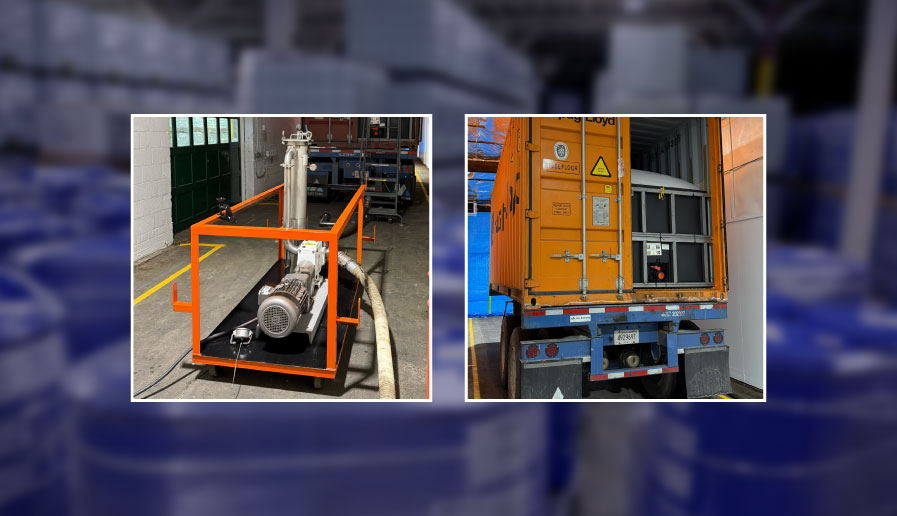
Transloading is the process of transferring product from one mode of transport or container type to another. In the case of flexi-tanks, that typically means receiving an inbound container, pumping the liquid out of the bladder, and transferring it into drums, totes, tanker trucks, or railcars for onward distribution.
It sounds straightforward but in practice, several variables determine whether the process goes smoothly or not.
The condition of the product at the time of transfer is one of the most critical. Food-grade oils and other viscosity-sensitive liquids respond to temperature and if a container has been sitting in cold conditions during transit or staging, the product inside may have thickened significantly by the time it arrives. Pumping thick or partially solidified liquid is slower, harder on equipment, and can result in product left behind in the bladder that would otherwise be recoverable.
Equipment compatibility matters too. The pumping systems, hoses, and transfer lines used during transloading need to be appropriate for the product type and volume being handled. For food-grade materials, cleanliness and compliance are non-negotiable at every step.
Why Heating Is Critical to the Transloading Process
For many food-grade bulk liquids, heating isn’t optional. It’s what makes the transfer possible in the first place. As temperatures drop, viscosity increases. Products like olive oil, avocado oil, lecithin, and glycerine can thicken considerably in transit, particularly during colder months. Without the ability to condition product to an appropriate temperature before pumping begins, transloading operations slow down, waste increases, and the risk of incomplete transfers rises.
A flexi-tank heating facility addresses this directly. By bringing the product to the right temperature before the transfer process starts, handlers ensure the liquid flows cleanly, pumps efficiently, and moves completely with minimal residue left in the bladder and minimal disruption to the overall schedule.
This is particularly important for operations where turnaround time matters. A container that sits waiting for product to warm up naturally creates downstream delays. A facility with dedicated heating capabilities eliminates that bottleneck before it starts.
What to Look for in a Flexi-Tank Transloading Facility
Not all transloading facilities are equipped to handle flexi-tank operations effectively — especially for food-grade bulk liquids. When evaluating a transloading partner, there are a few key capabilities worth verifying.
Dedicated heating infrastructure. A purpose-built flexi-tank heating space allows product to be conditioned before transfer, not after the fact. This should be a standard capability, not a workaround.
Food-grade compliance. Facilities handling food-grade materials need to operate under strict safety and sanitation standards. Certifications, protocols, and documentation should all be in place and readily verifiable.
Flexible outbound options. Once product is out of the flexi-tank, it needs somewhere to go. A facility with on-site rail access, truck loading capabilities, and drum or tote handling gives shippers more flexibility in how product moves onward.
Experience with viscosity-sensitive products. Handling specialty oils and liquid food ingredients requires familiarity with how these products behave. A transloading partner with relevant experience is far less likely to encounter preventable problems mid-operation.
How USA Warehousing Supports Flexi-Tank Transloading
USA Warehousing provides dedicated flexi-tank receiving and transloading capabilities designed specifically for food-grade bulk liquid operations.
Our flexi-tank heating facility of approximately 3,800 square feet allows inbound bulk liquids to be conditioned to the appropriate temperature before pumping or transfer begins. Combined with on-site rail access, food-grade compliance standards, and a full range of bulk liquid handling services, we provide the infrastructure needed to move flexi-tank shipments efficiently from arrival through to outbound dispatch.
For shippers evaluating their transloading options, having a partner with the right heating capabilities and food-grade experience in place makes the difference between a smooth operation and a costly one.
Flexi-tanks are an efficient way to move bulk liquids, but their efficiency depends heavily on what happens when the container arrives. The transloading process is where product quality is protected or compromised, where schedules are kept or lost, and where the right facility makes all the difference
With the right heating capabilities, the right equipment, and a food-grade compliance framework already in place, transloading doesn’t have to be the bottleneck in your supply chain.
Ready to streamline your flexi-tank transloading operations? Contact USA Warehousing to learn how our heated transloading and food-grade handling capabilities can keep your bulk liquid shipments moving on schedule.