Posted on
Food-grade liquids are only as valuable as their condition on arrival.
Specialty oils, liquid ingredients, and other bulk food-grade materials are sensitive by nature. They respond to changes in their environment and when those changes involve temperature, the consequences can range from minor handling delays to full product rejection. The challenge is that exposure to the wrong conditions doesn’t just happen in one place. It can happen at any point across the supply chain, from the moment a product leaves a facility to the moment it arrives at its destination.
Proper heating solutions address that challenge at every stage — not just at the end of it.
Why Food-Grade Liquids Are Vulnerable
Many food-grade liquids have physical properties that change significantly when exposed to cooler temperatures. As heat decreases, viscosity increases meaning products become thicker, harder to pump, and more difficult to transfer. In more severe cases, materials begin to solidify or crystallize entirely. Others cling to the walls of containers, creating waste and reducing the volume of usable product.
Common products affected include olive oil, avocado oil, lecithin, glycerine, and other specialty or food-grade oils. These materials need to remain fluid and stable throughout handling — not just during storage, but during every transfer, transition, and movement along the way.
When they don’t, the results are predictable: slower unloading, higher labor costs, strained equipment, and in some cases, product that requires reprocessing before it can be used at all.
Heated Transloading: Creating the Right Viscosity Before It Moves
Transloading is one of the most critical and most vulnerable points in the handling of food-grade liquids.
When bulk materials are transferred between railcars, containers, drums, or trucks, they need to be in the right viscous state to move efficiently. Product that hasn’t been properly conditioned beforehand creates problems the moment handling begins in the form of slower pump rates, incomplete transfers, material left clinging to container walls, and added labor time that compounds across an entire operation.
Heated transloading addresses this at the source. Rather than reacting to thick or partially solidified product mid-transfer, materials are brought to the appropriate temperature before the process starts. The result is a cleaner, faster, more predictable transfer with less waste, less strain on equipment, and fewer delays downstream.
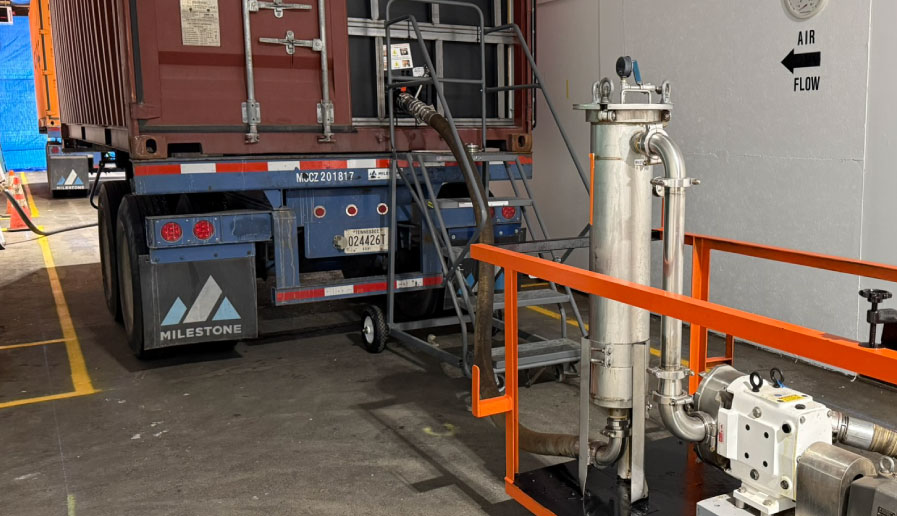
For drums and totes in particular, regulated heating rooms allow materials to be conditioned properly ahead of active handling. For bulk liquids moving through flexi-tanks, dedicated heating facilities maintain the right conditions so transfers happen on schedule. In both cases, the principle is the same: preparation before movement protects both the product and the process.
The Quality and Compliance Connection
For food-grade materials, quality protection is both an operational and compliance concern.
Food-grade liquids are subject to strict safety and handling standards. Product that has been improperly stored or handled may not meet those standards, regardless of what happens following. Contamination, degradation, or physical changes caused by inadequate conditions can result in rejected shipments, failed audits, and real liability exposure.
Proper heating solutions are part of a broader commitment to food-grade compliance — one that covers not just the condition of the product, but the integrity of the handling process around it. When storage and transit heating are managed correctly, the risk of a compliance issue originating from a temperature-related handling failure drops considerably.
How USA Warehousing Supports Food-Grade Liquid Handling
USA Warehousing provides heated handling solutions designed specifically for bulk food-grade liquids — covering all transloading needs from a single, purpose-built facility.
Our capabilities include heated rooms maintained at approximately 110°F for the regulated transloading of drums and totes, a flexi-tank heating facility of approximately 3,800 square feet for bulk liquid conditioning, low-pressure steam systems for on-rail heating of tanker cars and tanks, and on-site rail access that streamlines transfers from rail to truck. All operations are conducted under strict food-grade safety and compliance standards.
The result is a logistics operation that keeps food-grade liquids in the right condition from the time they arrive at our facility to the moment they leave it.
Protecting the quality of food-grade liquids isn’t a single-step process. It requires consistent, deliberate handling at every point in the supply chain — in the warehouse, on the rail, and everywhere in between.
With the right heating solutions in place, product arrives in the condition it left. Transfers happen on schedule, compliance is maintained, and the costly disruptions that come from inadequate handling simply don’t happen.
Ready to ensure your food-grade liquids are handled right from start to finish? Contact Us to learn how our heating solutions and food-grade handling capabilities can protect your product and keep your supply chain moving.